.sidebar h2 { margin:0; padding:0 0.2em; line-height:1.5em; }

Wednesday, September 18, 2013

Sharps Container

To begin the design process to create a sharps container, our group brainstormed what material would work best considering the safety and environmental effect of our choice. We decided that cardboard was the best choice because it would be durable enough to prevent the sharps from poking through and cardboard is reasonably a better material to discard than a plastic or synthetic material because it would decompose better in the long run. After choosing cardboard, we began to diagram what the container should look like. Our first design had a smaller box suspended within a larger box, so that if the sharps did somehow poke through the first box, the outer shell would protect anyone or anything that came in contact with the container.


The picture to the left was a brainstorm for the support that the inner box would rest on. Although the inner box was in the original design, we decided that only one box was needed to safely contain the sharps.
After deciding that we only needed one box, we decided on the dimensions that would be big enough for the box. The box didn't need to be very large because the blades or sharps are very thin, and do not take up a lot of space. The dimensions of the box are 3.25 x 4 x 4 in. with a volume of the container is 52 in^3. We traced the outline of the box in a cross shape so that we could mostly fold the box and minimize the gluing, in order to make it more sturdy. Once it was cut out, we shaped it into a box and cut a slit on the top.


Once the box was totally glued together, we made a velcro cover for the slot so that none of the sharps could fall out.


The final product was painted and the velcro lid is on the container, so this is what it looks like.


Sunday, September 15, 2013

Lantern Project

In order to begin the process, I looked for materials that I thought would be useful, and then upon gathering these materials, I moved forward with my designs. The key components of my original design were centered around building the frame out of two pieces of Styrofoam that I had found that created an arch when pressed together. Then after creating the four main beams with a roof, I would attach them to the base of the lantern, also made of Styrofoam. 

Here is a basic sketch of my design, and the earliest built frame of the lamp that the rest of my designing would be based on:


Once the skeleton was built, I decided to construct my circuit. My circuit was connected by using paperclips, fully straightened out and then attached at the ends by forming little loops with pliers that connected like a chain.  By using the calculations shown below, I identified the amount of ohms needed for the circuit. 

I also decided to put the light bulb in the center of the base of the structure. After that, I decided to design a switch. The switch that I used had two paper fasteners with a paper clip that can be taken on or off to turn off the light. 


It took me a few tries to connect the circuit inside of the frame and have everything work, but after re- positioning a few wires, I got it to work. Once the light was working on the inside of the frame, I reinforced the wires and the battery with some tape to bind them down and keep them from shifting. After that, I began to add foil to make the inside reflect the light of the small LED light to maximize it. There is foil on the base and the ceiling of the structure to maximize brightness. 

Once all these steps were done, my main priority was to make it look good, so I added some paper that I found in the recycling. Here are some pictures of the final product!


Sunday, September 8, 2013

Poor People's Energy Outlook 2010

I was completely shocked by the number of problems that impoverished people face on a daily basis, whereas as a United States citizen, I take for granted. Something as simple as flicking on a light, twisting on the water, or grabbing food out of the fridge. All of these things are so basic and widespread that we rarely ever think about them. Of course I was aware that third world countries did not have access to these amenities; however, it is rarely something that I think about. I enjoyed the optimism and planning of the article which set out goals and practical solutions to the problems that these countries face. I very passionately believe that renewable energy sources are an excellent alternative to using a national grid in under-developed countries. Renewable energy is cost effective in the long run, and do no produce any harmful emissions. I was also surprised by the danger of cooking with old fashioned methods. I did not realize that something as simple as burning wood could produce smoke that is one of the largest causes of death. This article made it clear to me that there are many problems that need addressing, and now it requires action because the technology needed to solve these problems exists, but must be set in motion.

About Me

Hey all! 
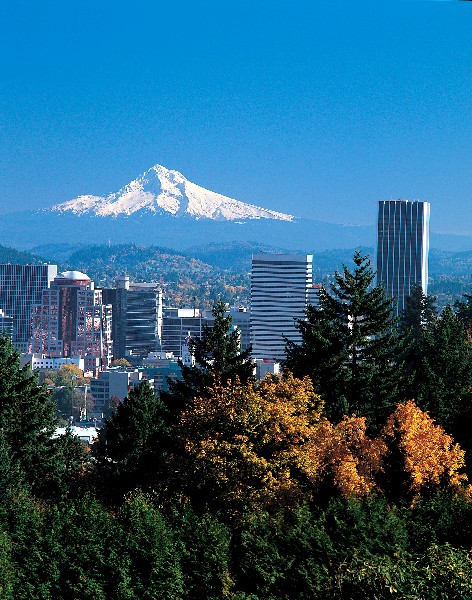
My name is Kelsey Cathcart, and I'm from Portland, Oregon. I'm a first year at Wellesley, and my  hopeful major is engineering. I am taking this class because it is right up my ally. I love building things and examining how they work. Aside from this and my love of math, the primary reason why I want to become an engineer is to work to find solutions that our society faces in this day and age.  More specifically, I am concerned with the current environmental practices in place, and I would love to find a more sustainable and eco-friendly way to live through design. This class will give me an idea of what engineering is all about, and I look forward to working on new and practical projects every week.